Field notes / competitors-buying-decisions
Bank Statement Parser API Comparison 2026: Build a Defensible Shortlist
A bank statement parser API comparison for 2026 focused on documented contract fit, pricing units, operating constraints, and controlled finalist testing.
2026-07-31 · 14 min read · bankstatement.ai Team

TL;DR
- Eliminate candidates that fail a mandatory input, output, authentication, retention, or workflow requirement before scoring preferences.
- Distinguish documented capabilities from observed test results, operational inferences, and unresolved fields.
- Compare pricing units only after defining a representative workload, billable units, minimums, overages, and included services.
- Treat accuracy, speed, reliability, and review effort as unmeasured until finalists process identical controlled fixtures.
- Build a requirements-specific shortlist rather than declaring a universal winner.
An accounting software team can identify several plausible APIs without knowing which ones fit its operating contract. A candidate may accept the required statement but lack a documented transaction response, conflict with credential rules, or provide too little time to review and preserve results. A useful comparison therefore begins with required inputs, outputs, authentication, retention, and workflow—not the length of a feature list.
Table of Contents
- Key Takeaways
- Methodology: Separate Facts, Tests, Inferences, and Gaps
- Eliminate Candidates Before You Score Preferences
- Comparison Matrix: Contract Fit Before Vendor Claims
- Normalize Pricing Units Without False Equivalence
- Worked Shortlist for a Small Accounting Software Team
- Operating Constraints That Can Change the Shortlist
- What to Verify Before Testing Finalists
- FAQ
Key Takeaways
- Gate before weighting. A documented mandatory failure cannot be offset by a desirable interface, export, or secondary workflow.
- Unknown is not no. An undocumented capability remains unresolved until a dated official source or authorized test settles it.
- Documentation is not a benchmark. Comparative performance requires identical fixtures, conditions, and inspection criteria.
- Commercial units need a common denominator. Pages and documents are not equivalent billing units, and included services can change effective cost.
- Review and storage are workflow requirements. A successful API response is not automatically an approved accounting record.
Methodology: Separate Facts, Tests, Inferences, and Gaps
Evidence statuses in this comparison were assessed on August 5, 2026. Each vendor row includes that checked-on date and uses four classifications:
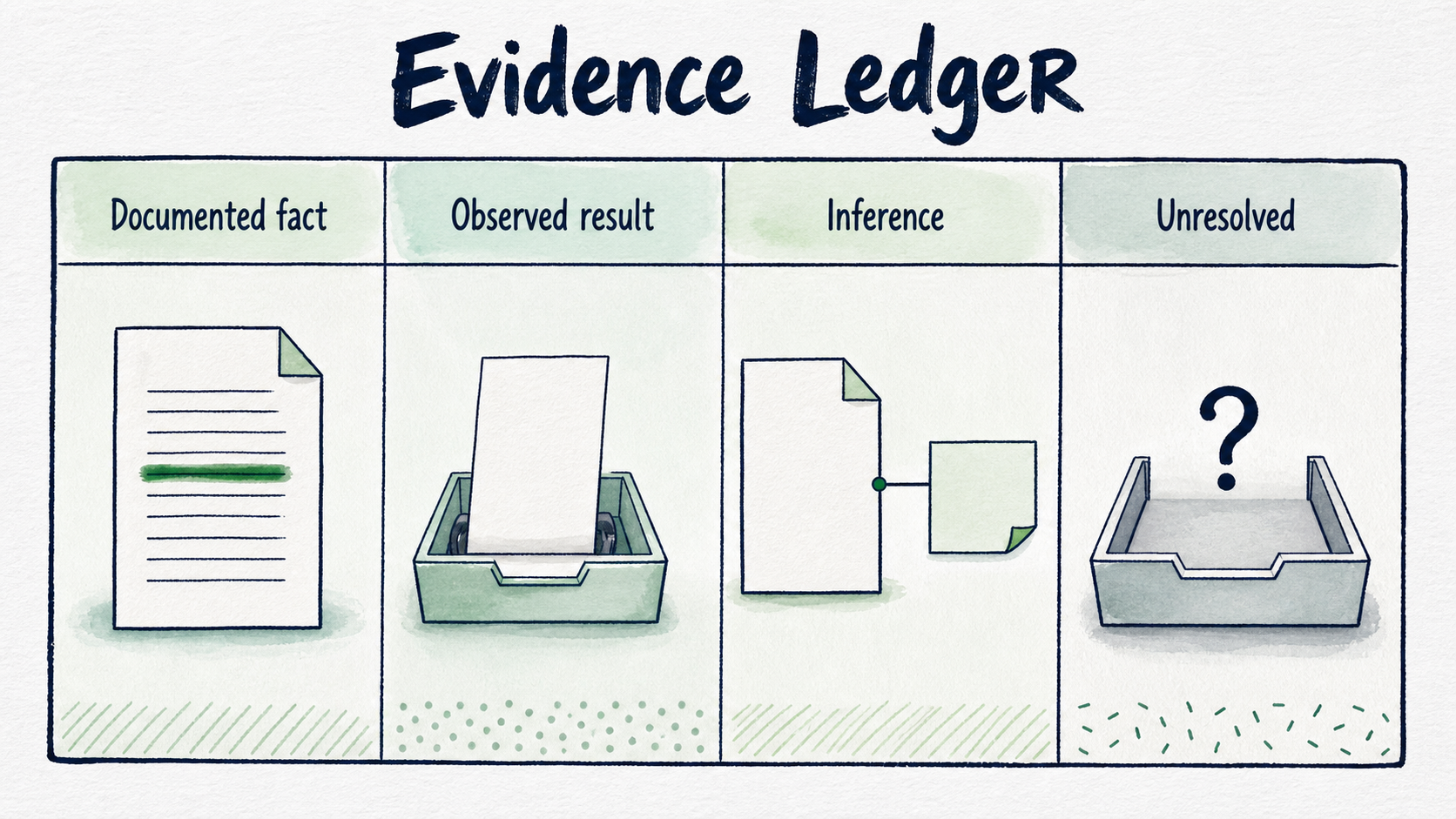
- Documented fact: a capability or obligation stated in dated or currently indexed official product, API, policy, terms, or commercial material.
- Observed result: behavior recorded when a candidate processes an identical authorized fixture under disclosed conditions.
- Inference: an operational conclusion drawn from a documented fact. For example, a seven-day result-expiry rule implies that a buyer needing longer access must transfer approved records elsewhere.
- Unresolved: a field that lacks sufficiently specific, dated primary documentation or an applicable executed test. Unresolved does not mean absent.
No controlled, shared-fixture results are cited for the eight candidates. This comparison therefore makes no claim about relative accuracy, row correctness, sign handling, processing speed, reliability, or review burden. It also makes no claim about measured search volume, keyword difficulty, or traffic potential for this topic.
A defensible vendor ledger should record the official URL, the precise contract fact it supports, the checked-on date, and any qualification. Only bankstatement.ai has enough dated primary-source coverage here to populate the required contract fields. Google Document AI, Mindee, Veryfi, DocuClipper, StatementParse, StatementOCR, and Parsio remain active candidates, but their mandatory fields are verification items rather than assumed capabilities.
Eliminate Candidates Before You Score Preferences
Freeze mandatory requirements before evaluating optional features. Apply these gates in order:
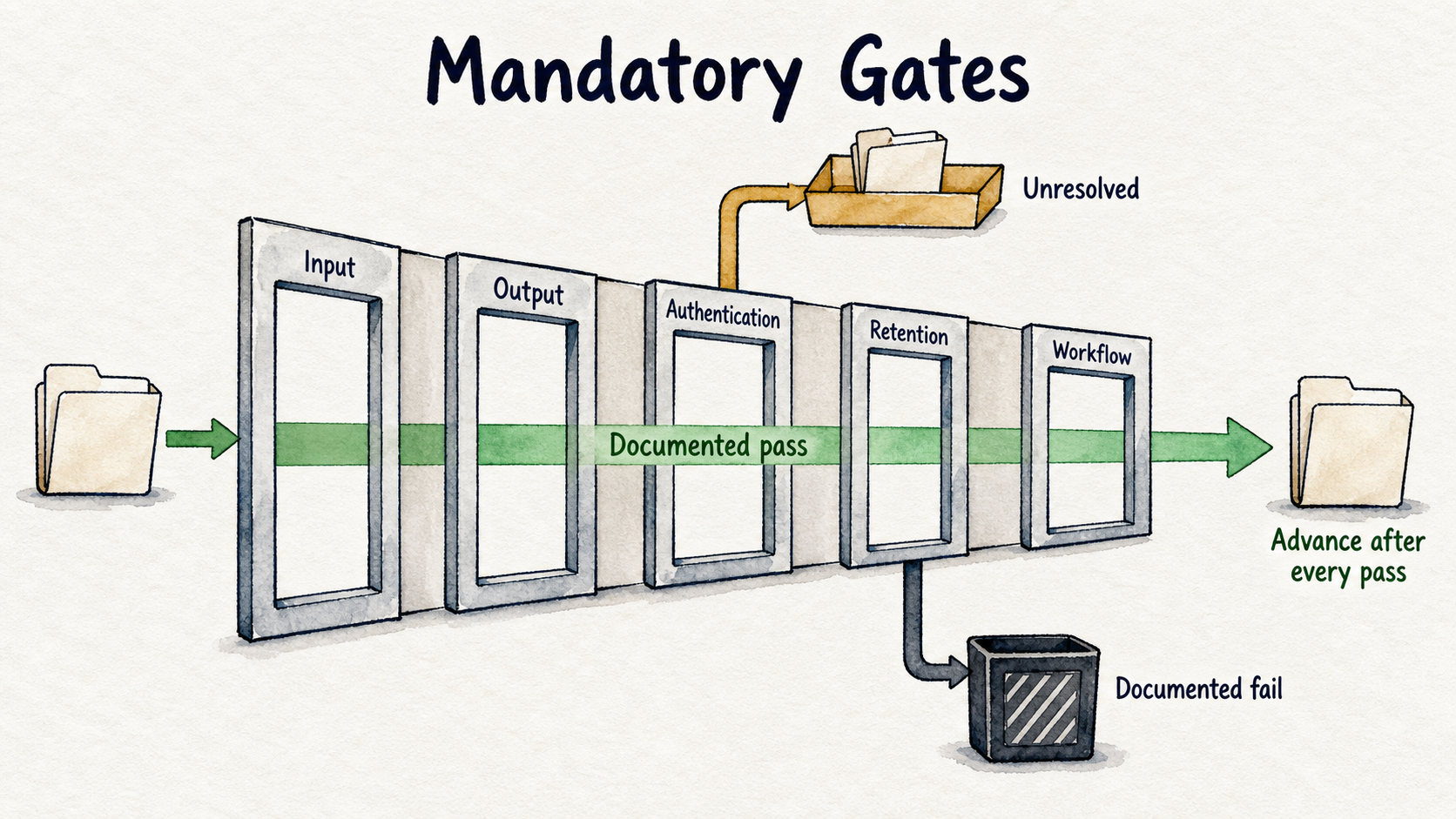
- Input gate: The candidate must document support for every required statement format and relevant file constraint, such as PDF, CSV, XLSX, size, encryption, or page limits.
- Output gate: It must document the required transaction fields and delivery artifact, such as transaction JSON, CSV, XLSX, or a combined workbook.
- Authentication gate: Its authentication method and credential placement must satisfy the buyer’s application and security architecture.
- Retention gate: Its deletion and availability windows must meet policy requirements while allowing enough time for review and transfer to approved storage.
- Workflow gate: Its job model, errors, retry behavior, batching, review path, and downstream accounting handoff must fit the operating process.
Use three outcomes:
- Documented pass: Primary documentation satisfies the requirement.
- Documented fail: Primary documentation establishes a mismatch with the frozen requirement.
- Unresolved: Documentation does not settle the requirement.
Only documented passers on every mandatory gate should advance to preference scoring. An unresolved field pauses a candidate; it does not silently pass or fail it. For example, if transaction JSON is mandatory, a documented absence is a failure, while undocumented JSON support is unresolved.
Comparison Matrix: Contract Fit Before Vendor Claims
Bank statement OCR is the extraction category, not a vendor. The named candidate entities are bankstatement.ai, Google Document AI, Mindee, Veryfi, DocuClipper, StatementParse, StatementOCR, and Parsio. Their names identify products or providers under evaluation; they do not establish any capability by themselves.
The matrix separates the fields needed for a contract-fit decision. “Documented” describes source coverage, not comparative quality.
| Candidate | PDF input | CSV input | XLSX input | Transaction fields and JSON | CSV output | XLSX output | REST API and authentication | Job behavior | Errors and retries | Batching and combined output | Retention | Accounting extras | Evidence status and checked-on date |
|---|---|---|---|---|---|---|---|---|---|---|---|---|---|
| bankstatement.ai | Documented | Documented | Documented | Date, description, and amount documented; JSON result path documented | Documented | Documented | REST API with bearer authentication; server-side token handling documented | Asynchronous jobs; completion or failure must be polled | HTTP 402 for insufficient page credit; HTTP 429 includes retry guidance | Multiple results can be combined into XLSX | Structured results, exports, and associated job metadata expire after seven days | Company grouping, billing links, and invoice worklists documented | Documented contract coverage; evidence indexed July 23, 2026; status checked August 5, 2026 |
| Google Document AI | Unresolved | Unresolved | Unresolved | Unresolved | Unresolved | Unresolved | Unresolved | Unresolved | Unresolved | Unresolved | Unresolved | Unresolved | Verification required across every mandatory field; status checked August 5, 2026 |
| Mindee | Unresolved | Unresolved | Unresolved | Unresolved | Unresolved | Unresolved | Unresolved | Unresolved | Unresolved | Unresolved | Unresolved | Unresolved | Verification required across every mandatory field; status checked August 5, 2026 |
| Veryfi | Unresolved | Unresolved | Unresolved | Unresolved | Unresolved | Unresolved | Unresolved | Unresolved | Unresolved | Unresolved | Unresolved | Unresolved | Verification required across every mandatory field; status checked August 5, 2026 |
| DocuClipper | Unresolved | Unresolved | Unresolved | Unresolved | Unresolved | Unresolved | Unresolved | Unresolved | Unresolved | Unresolved | Unresolved | Unresolved | Verification required across every mandatory field; status checked August 5, 2026 |
| StatementParse | Unresolved | Unresolved | Unresolved | Unresolved | Unresolved | Unresolved | Unresolved | Unresolved | Unresolved | Unresolved | Unresolved | Unresolved | Verification required across every mandatory field; status checked August 5, 2026 |
| StatementOCR | Unresolved | Unresolved | Unresolved | Unresolved | Unresolved | Unresolved | Unresolved | Unresolved | Unresolved | Unresolved | Unresolved | Unresolved | Verification required across every mandatory field; status checked August 5, 2026 |
| Parsio | Unresolved | Unresolved | Unresolved | Unresolved | Unresolved | Unresolved | Unresolved | Unresolved | Unresolved | Unresolved | Unresolved | Unresolved | Verification required across every mandatory field; status checked August 5, 2026 |
The populated row is supported by the official API documentation, statement-converter material, and retention policy. The API documentation covers bearer authentication, asynchronous jobs, JSON results, CSV/XLSX exports, combined XLSX output, HTTP 402 handling, HTTP 429 retry information, and server-side token placement. The converter documentation covers PDF, CSV, and XLSX inputs up to 25 MB and date, description, and amount transaction rows. The invoice collector page documents company grouping, invoice worklists, and company access links.
The seven unresolved rows create a concrete verification queue. For each candidate, obtain primary documentation for formats, transaction schema, export types, REST access, authentication, synchronous or asynchronous behavior, error semantics, retry instructions, batching, combined outputs, retention, and accounting-workflow extras. Record a pass only where the source expressly settles the frozen requirement.
This matrix cannot support “best,” “fastest,” or “most accurate” labels. It supports one documented contract-fit candidate and seven candidates whose contract fit has not yet been established.
Normalize Pricing Units Without False Equivalence
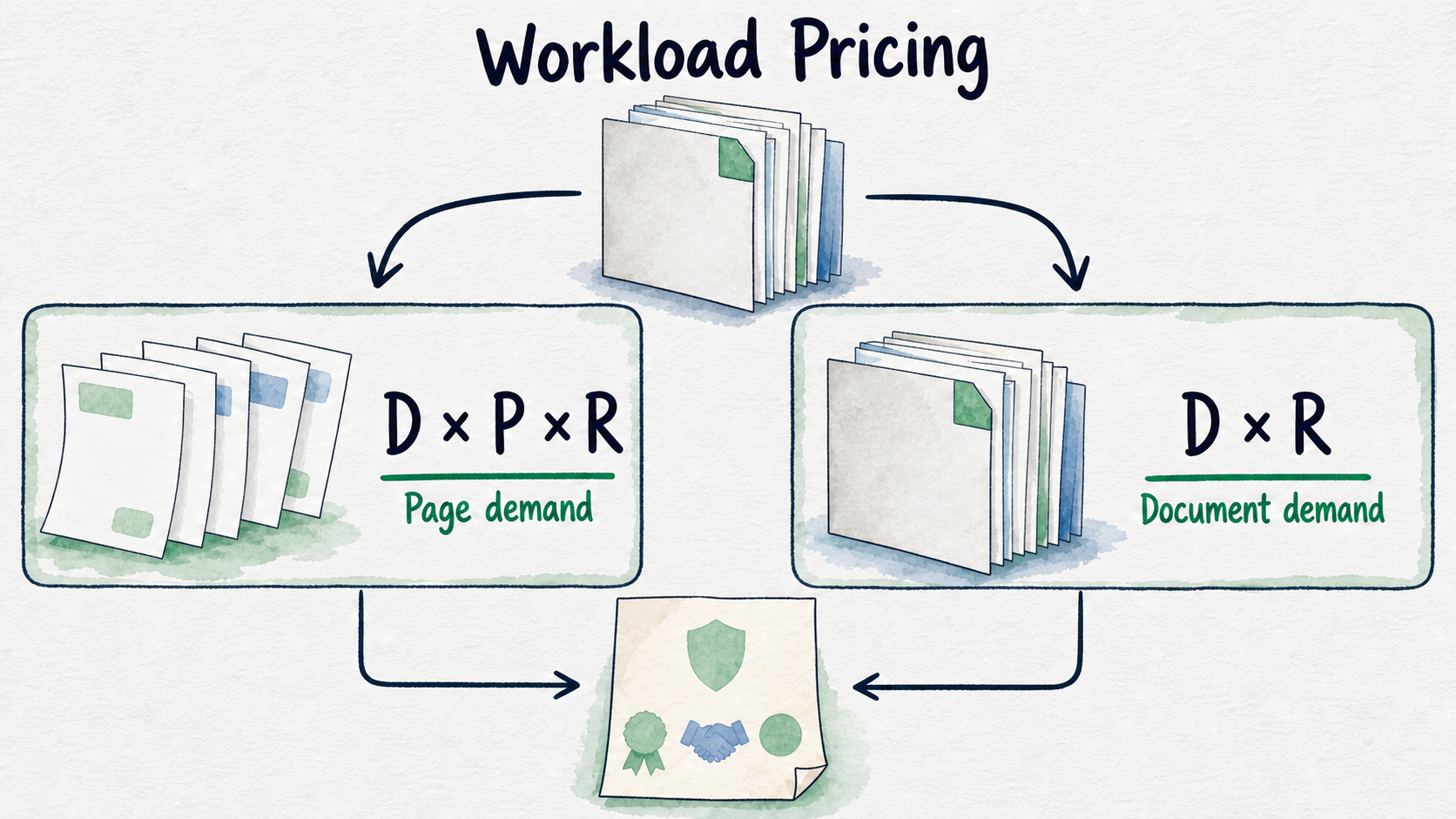
Per-page and per-document pricing measure different consumption. A multi-page statement can consume several page units but one document unit, while minimum commitments, overages, failed-job treatment, and included features can reverse an apparent sticker-price advantage.
For every candidate, record:
- the exact definition of a billable page or document;
- the monthly allowance or minimum commitment;
- overage pricing and treatment of failed or retried jobs;
- whether API access, JSON, CSV/XLSX, batching, and combined exports are included;
- whether review tools or accounting extras have separate charges;
- the currency, tax treatment, plan date, and checked-on date.
Use synthetic workload variables:
D= statements per monthP= average pages per statementR= expected retry or reprocessing factor under the documented billing rules
Estimated monthly page demand is D × P × R. Estimated document demand is D × R. Apply each vendor’s verified allowance, minimum, and overage rules to the appropriate demand figure, then add separately charged requirements.
Do not calculate or rank competitor costs until current official sources establish their billing units and inclusions. The official bankstatement.ai pricing page should also be rechecked immediately before publication or procurement; its indexed observation does not provide a reliable page-update date. Pricing belongs in the shortlist only when the commercial record is current.
Worked Shortlist for a Small Accounting Software Team
Consider a synthetic small accounting software team with these mandatory requirements:
- PDF statement input;
- date, description, and amount in transaction JSON;
- server-side authentication;
- asynchronous completion handling;
- CSV or XLSX export;
- a defined deletion or result-expiry window;
- human review before accounting records are approved.
This is an illustrative contract, not a claim about every buyer’s needs.
Applying the gates produces the following provisional decisions:
| Candidate | Outcome | Reason |
|---|---|---|
| bankstatement.ai | Advance to controlled testing | Official material documents the required PDF input, transaction fields, JSON path, server-side bearer authentication, asynchronous jobs, spreadsheet exports, and seven-day result-expiry window. The advance is based on contract coverage, not measured quality. |
| Google Document AI | Pause in verification queue | PDF input, transaction JSON, authentication placement, job behavior, spreadsheet export, and retention must all be settled by dated primary documentation before the candidate can pass. |
| Mindee | Pause in verification queue | Every mandatory field in the synthetic contract remains unresolved and requires primary-source confirmation. |
| Veryfi | Pause in verification queue | Every mandatory field in the synthetic contract remains unresolved and requires primary-source confirmation. |
| DocuClipper | Pause in verification queue | Every mandatory field in the synthetic contract remains unresolved and requires primary-source confirmation. |
| StatementParse | Pause in verification queue | Every mandatory field in the synthetic contract remains unresolved and requires primary-source confirmation. |
| StatementOCR | Pause in verification queue | Every mandatory field in the synthetic contract remains unresolved and requires primary-source confirmation. |
| Parsio | Pause in verification queue | Every mandatory field in the synthetic contract remains unresolved and requires primary-source confirmation. |
No named candidate receives a documented-fail label because no documented mismatch is established for this synthetic contract. A documented failure would occur, for example, if a candidate’s official contract expressly excluded mandatory PDF input or required client-side credential exposure that the buyer prohibited.
The provisional shortlist contains bankstatement.ai as a documented contract-fit candidate. The other seven candidates remain eligible but paused; each advances only after all mandatory fields become documented passes. None is ranked for accuracy or speed.
Once two or more candidates pass the contract gates, send them through the same controlled API testing method. Use identical authorized fixtures and frozen ground truth rather than demonstrations or unrelated samples.
Operating Constraints That Can Change the Shortlist
For bankstatement.ai, the documented operating contract requires bearer tokens to remain server-side. A browser or mobile application therefore needs a buyer-controlled backend or proxy rather than embedding the token in client code. Processing is asynchronous: the application creates a job, polls until it completes or fails, and then retrieves JSON or exports.
The integration also needs explicit handling for insufficient page credit and rate limits. HTTP 402 indicates insufficient page credit. HTTP 429 includes retry timing information, so the caller must respect the documented retryAfterSeconds value rather than retrying without control.
Retention affects both compliance screening and day-to-day operations. The policy says completed or failed uploads are removed after processing or cleanup, while stale incomplete uploads are removed within seven days. Structured results, exports, and associated job metadata expire after seven days. A buyer that needs longer access must copy reviewed outputs into its approved durable system before expiry. That storage obligation is an operational inference from the documented deadline, not a claim that the processor provides permanent archival storage.
Temporary upload handling should not be converted into a broader security or compliance claim. It does not by itself establish bank-grade security, a certification, or suitability for a particular regulated environment.
Outputs also require human review. The official Terms of Service do not guarantee extraction, company matching, or export completeness or accuracy and assign review responsibility to the user. The buyer should define who checks missing rows, dates, amount signs, descriptions, duplicates, totals, and company matches before downstream use.
Apply equivalent operating scrutiny to every other candidate once its documentation is recorded. A parser can pass a format gate and still fail because its credential model, job lifecycle, retry rules, retention window, or review process conflicts with the buyer’s workflow.
What to Verify Before Testing Finalists
Create a dated procurement packet for all eight candidates containing:
- an official URL and precise supporting claim for every mandatory field;
- current access requirements, authentication, quotas, pricing units, minimums, overages, and inclusions;
- API schemas, job behavior, documented errors, retry rules, batching, and combined-output behavior;
- upload handling, result availability, deletion terms, and durable-storage responsibilities;
- unresolved questions with a named owner and deadline;
- normalized workload assumptions;
- the same synthetic, authorized fixture set for every finalist;
- a frozen approval rule for output correctness and review effort.
For Google Document AI, use the dedicated Google platform analysis to examine the deeper platform-versus-specialist decision, including setup ownership, output structure, authentication, retention, pricing units, and ongoing build-and-operate responsibility. Use the published testing guide for fixture execution rather than treating documentation as performance proof.
Refresh all primary sources immediately before procurement approval. Commercial terms, access rules, quotas, retention policies, and API contracts can change the result even when the candidate name remains on the shortlist.
Compare the API contract first. When a candidate documents every mandatory requirement, create an account and test it with a synthetic statement before sending sensitive production records.
FAQ
Is an undocumented capability the same as an unsupported capability?
No. Unsupported requires evidence of absence or incompatibility. If documentation does not settle the question, mark the field unresolved and obtain an official source or execute an authorized test.
Why are per-page and per-document prices not directly equivalent?
They count different units. Statement length, billable-unit definitions, monthly commitments, overages, retries, failed jobs, and included outputs can materially change workload cost.
When are comparative accuracy or speed claims valid?
Only after candidates process identical authorized fixtures under disclosed conditions and their outputs are compared with frozen ground truth. Product documentation and unrelated demonstrations cannot establish a fair performance comparison.
Can retention eliminate a candidate?
Yes. A candidate fails if its documented retention or result-availability window conflicts with a mandatory policy or does not leave enough time for the required review and transfer workflow. An undocumented retention period remains unresolved rather than becoming an automatic failure.
Why review structured output after a successful API response?
A successful response confirms delivery, not accounting correctness. Review may still be needed for missing transactions, amount signs, dates, descriptions, duplicates, totals, and downstream classifications.
When should the 2026 shortlist be refreshed?
Refresh the dated source ledger before procurement approval, before production onboarding, and whenever a finalist changes its API contract, authentication, pricing unit, quotas, retention terms, or required workflow. Re-run controlled tests when a material product change could affect observed results.